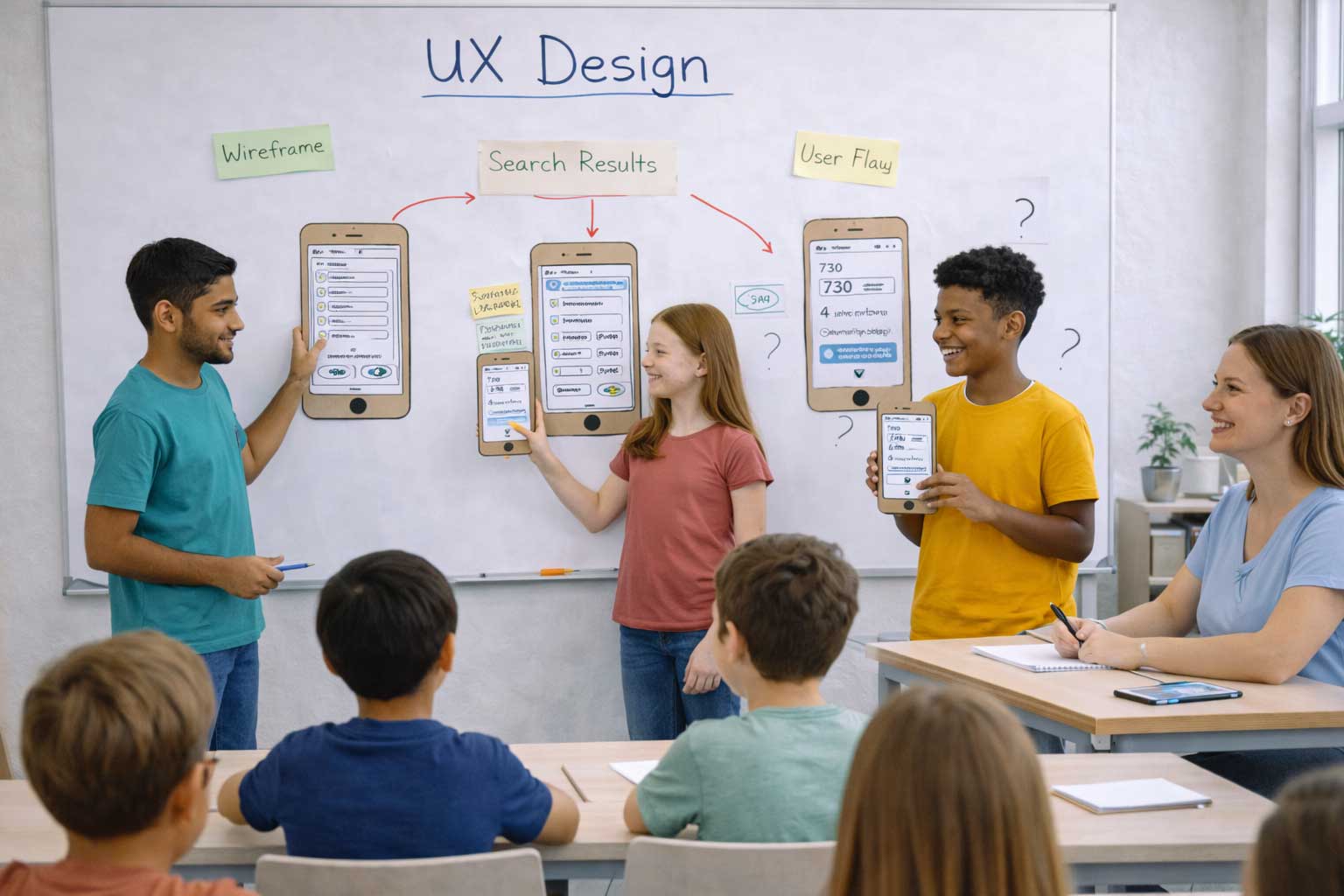
🧪 STEM Summer Camps in Toronto (2026 Guide)
A fast orientation for families comparing robotics, coding, engineering, and more applied innovation programs.
For many Toronto parents, STEM camps feel like the obvious place to start.
They promise hands-on learning, problem-solving, and real skills in science, technology, engineering, and math. For curious kids, that can be a strong fit.
This guide explains the different kinds of STEM camps in Toronto, what each type tends to offer, and how to tell which one matches your child’s interests. If you want the bigger picture first, start with our roundup of the best summer camps in Toronto for curious kids, then use this page to compare the STEM side of the market more carefully.
What Parents Usually Mean by “STEM Camp”
In practice, STEM camps tend to fall into a few categories:
- robotics camps
- coding camps
- engineering and science camps
- innovation-based programs that combine STEM thinking with real-world problem-solving
The label is broad, so it helps to compare the style of learning, not just the label. One STEM camp may feel like structured kit-building. Another may feel like software design. Another may be science-heavy and experimental. Parents who compare only the headline often miss the real difference.
How Robotics, Coding, Science, and Engineering Camps Differ
STEM is useful as a category, but it hides real differences in what children actually do all day.
🤖 Robotics Camps
Best for kids who like machines, systems, and building tangible things.
Robotics camps often involve assembling kits, programming movements, and solving design challenges in teams. They are especially appealing for students who like seeing a physical object respond to their instructions.
💻 Coding Camps
Best for kids curious about computers, games, and software.
Coding camps usually introduce programming through beginner-friendly projects such as games, animations, websites, or simple apps. They often work well for students who enjoy screen-based building and logical sequences.
⚙️ Engineering & Science Camps
Best for kids who enjoy experiments, testing ideas, and understanding how physical systems work.
These camps may include structural design challenges, physics activities, chemistry demos, or renewable energy projects. They often appeal to students who like evidence, experiments, and seeing how cause and effect work in the physical world.
What Kinds of Kids Thrive in STEM Camps
Not every child who is “smart” wants a STEM camp. The best fit usually depends on how they like to think and work.
Kids who thrive in STEM environments often enjoy:
- taking things apart and figuring out how they work
- solving problems through trial and error
- building systems step by step
- working with rules, patterns, and testable ideas
- seeing a result they can measure or improve
Some children also like STEM because it gives them an alternative to performance-heavy or verbally driven settings. Others enjoy it because they like collaboration that has a visible task attached to it.
How to Tell Whether a STEM Camp Is Truly Hands-On
One of the most useful questions a parent can ask is simple: what percentage of the day is spent actively building, testing, or solving something?
A strong STEM camp usually includes:
- a clear project or experiment to work toward
- small-team or individual build time
- feedback loops where students revise what they made
- instructors who help students reason through problems instead of just demoing solutions
A weaker version may still sound impressive in a brochure, but rely too much on passive watching, kit instructions, or surface-level activities that do not build toward anything meaningful.
Why Some Families Want STEM Plus Communication Skills
Traditional STEM programs often do a good job teaching how to build something. They are not always as strong at teaching how to explain an idea, test it with real people, or persuade others that it matters.
For many parents, that is the next step. They want a program that keeps the hands-on problem-solving of STEM but also develops communication, teamwork, and presentation skills.
That is especially relevant for older kids. By ages 10–16, students often benefit from learning not just how to make something technically, but how to talk about why it should exist.
STEM and Real-World Problem Solving
Some programs expand beyond classic STEM and ask a bigger question:
How do ideas move from concept to the real world?
That can include product design, testing, economics, communication, and decision-making. It can also include identifying a real user need, interviewing people, adjusting an idea based on feedback, and thinking about whether the final result is actually useful.
This is where STEM begins to overlap with design thinking, entrepreneurship, and systems thinking. For some students, that overlap is exactly what makes a program engaging.
Spotlight: The Money Club.Org
The Money Club.Org is not a robotics camp or a coding camp. It focuses on the systems side of innovation.
Students ages 10–16 explore financial literacy, entrepreneurship, design thinking, pricing, incentives, and communication. They develop product ideas, test simple business concepts, and present their work at the end of the program.
The program introduces students to the systems behind everyday life — markets, incentives, and decision-making. Instead of memorizing concepts, students learn by building ideas and seeing how those ideas interact with the real world.
For students interested in the bigger picture behind products, markets, and real-world decisions, this can be a strong complement to more traditional STEM offerings. Families can see the full program curriculum, read how the program works, check the schedule and pricing, or reserve a spot for Summer 2026.
How to Compare a Traditional STEM Camp with an Innovation Program
If your child already enjoys coding, robotics, or engineering, the real question may not be whether they should do STEM at all. It may be what kind of STEM-adjacent learning will help them grow next.
A traditional STEM camp may be strongest for a student who wants more technical practice. An innovation-oriented program may be stronger for a student who wants to connect technical curiosity to users, products, communication, and decision-making.
Parents comparing those options may also want to read about summer camps for older kids and teens in Toronto and entrepreneurship summer camps for teens, since those pages describe the skills overlap more directly.
Questions Parents Can Ask Before Choosing a STEM Camp
When two STEM camps sound similar on paper, the best differentiator is usually not the label. It is the learning experience students actually get once they arrive.
Useful questions include:
- Will my child be building something every day, or mostly following instructions?
- Does the camp encourage students to solve problems independently?
- Is the material better for beginners, or for kids who already have experience?
- Do students explain and present what they made, or only complete the activity?
- Will this feel exciting for my child’s age and maturity level?
Those questions make it much easier to tell whether a STEM camp is truly hands-on, appropriately challenging, and worth the time.
When a STEM Camp Is a Great Fit
A strong STEM camp is usually a great fit when a child is energized by building systems, solving technical problems, and improving ideas through testing. It may be less effective when a child is really looking for broader creative ownership, social communication, or the “why” behind products and markets.
That is why some families compare STEM programs with innovation-oriented options instead of choosing one category automatically. The real goal is not to pick the most impressive label. It is to find the format that matches the child in front of you.
Final Thought
The best STEM camp is not always the one with the flashiest label.
It’s the one that matches your child’s actual curiosity — whether that’s robots, code, engineering, or the deeper systems behind how ideas become real. If you want to compare options more broadly, go back to the Toronto summer camp for teens homepage or the full roundup of the best summer camps in Toronto for curious kids.
Related Guides
- Best summer camps in Toronto for curious kids
- STEM summer camps in Toronto
- Summer camps for older kids and teens in Toronto
- Entrepreneurship summer camps for teens
- Summer programs near the University of Toronto
- Summer camps for teens in Toronto
- Financial literacy camps for kids
- Entrepreneurship camps in Toronto
Everything you need to know
Program Details
-
Location
UTSU Student Commons
230 College Street, Toronto - Dates August 10th–14th
- Program Size Limited to 30 participants
- Who It’s For Computer-literate students
- Tuition $200